FootPrint
A flexible-workspace website the client can maintain, with editable services, locations and offers.
FootPrint provides flexible workspace at two central Auckland locations. REB delivered its marketing website as a team project. My work included the content architecture, CMS editing workflow and improvements made as the client's team began maintaining the site themselves.
Shared templates turn editable services and locations into public pages, while promotions and pricing can change through the editor. OfficeRnD continues to handle booking and member access. The site presents the business and connects visitors to those systems, without rebuilding them.
Highlights
- A REB team delivery for an Argosy brand
- Services and locations generated from editable content
- Connected to existing booking and member systems
In action
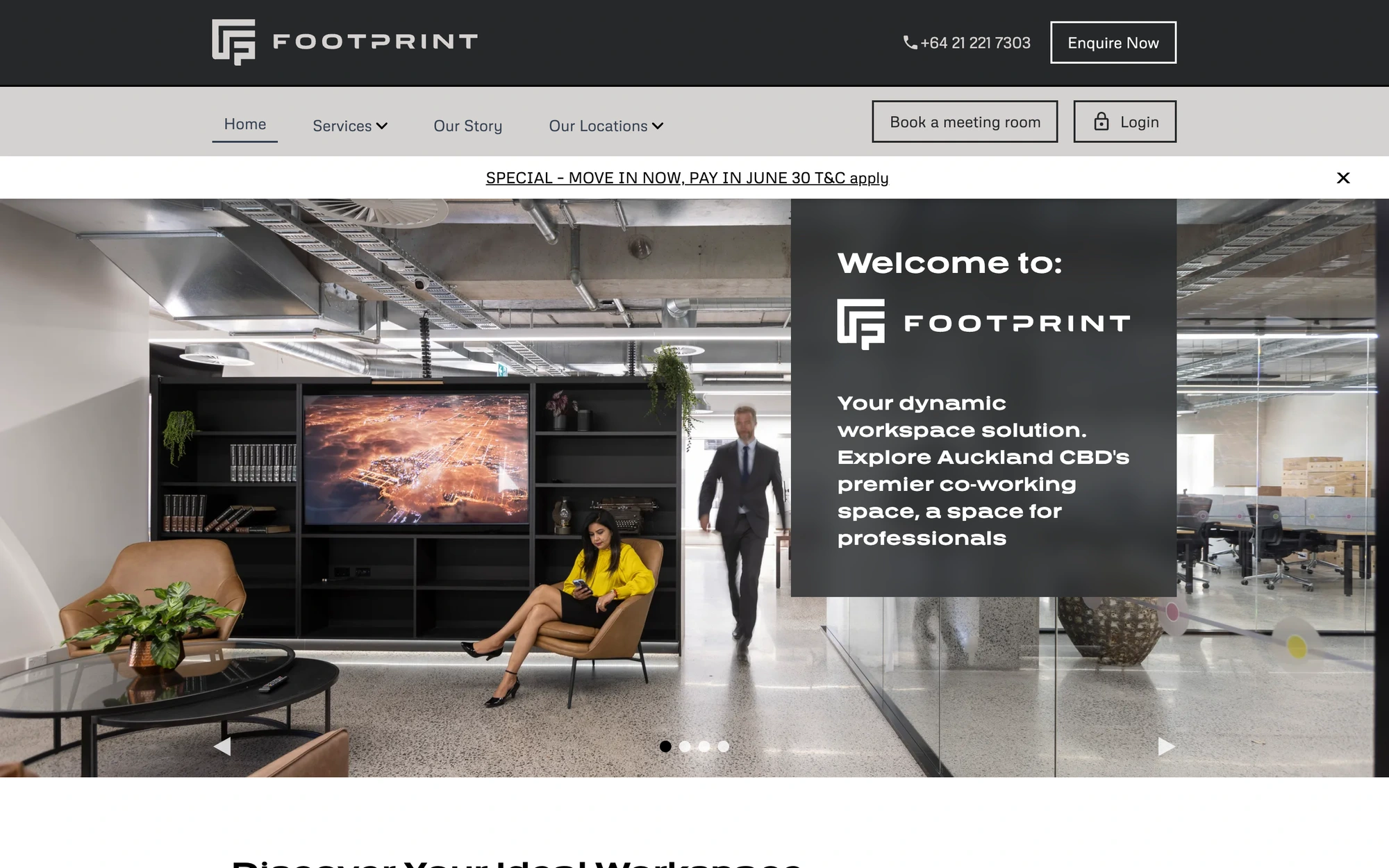
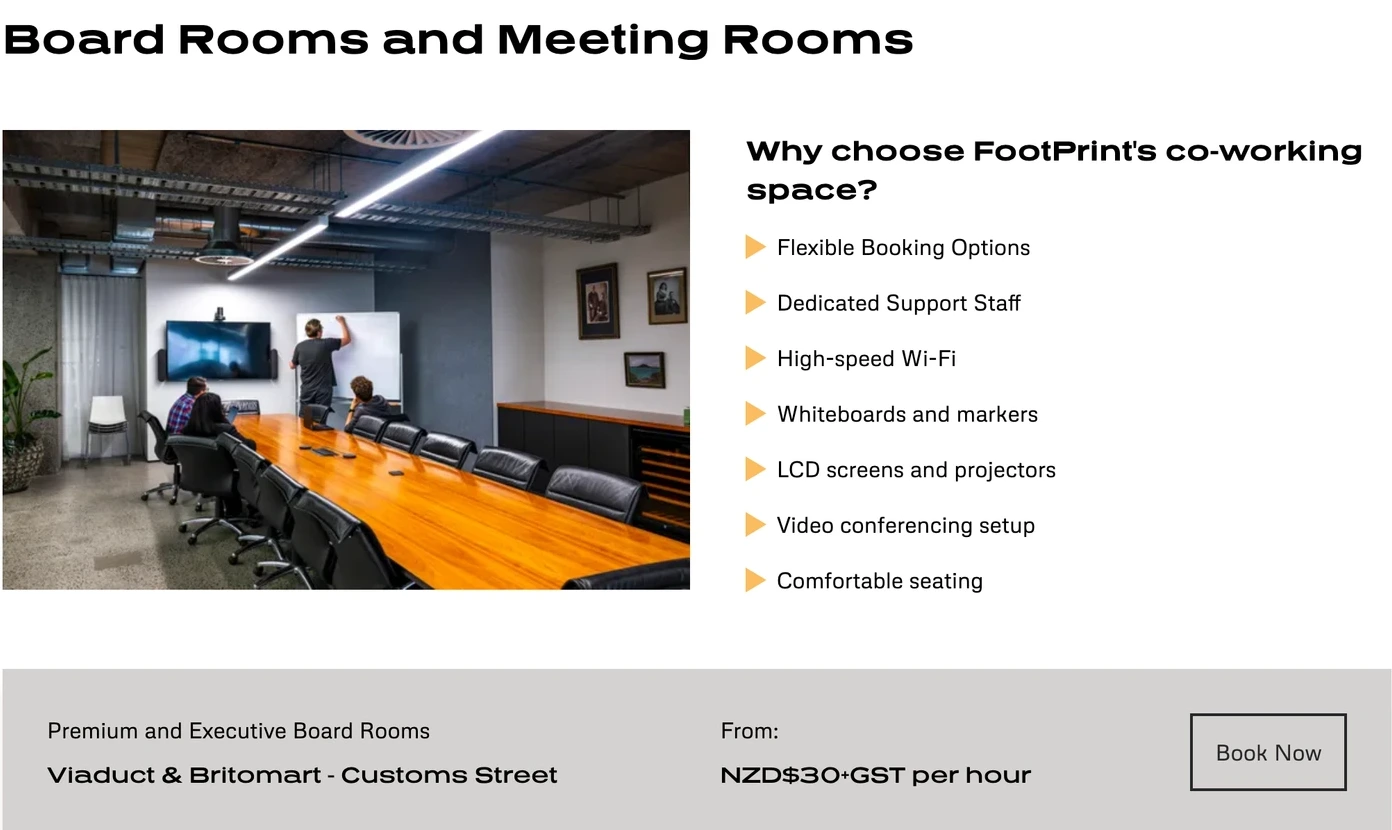
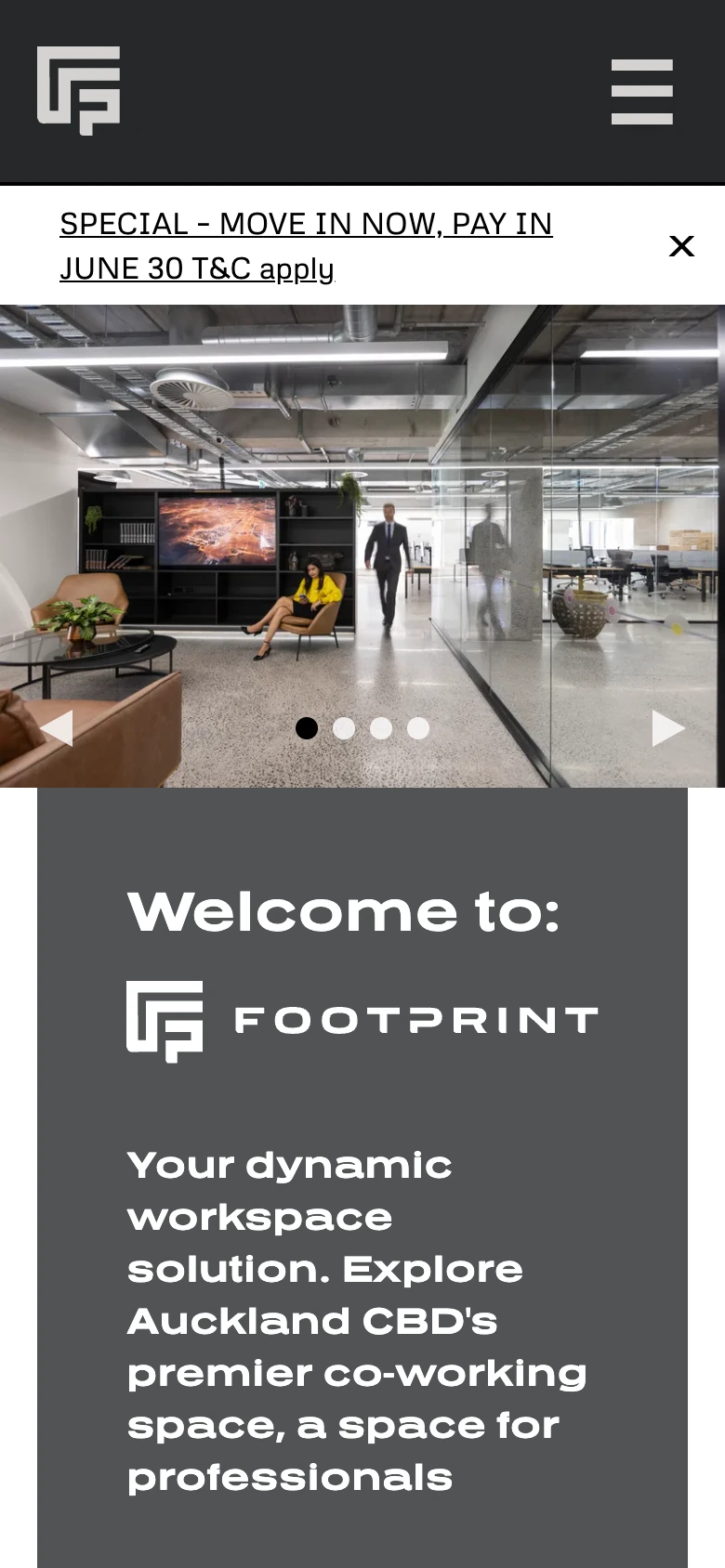
A public front door for the business
FootPrint provides flexible workspace at two central Auckland locations. Through REB, we delivered its marketing website and the content system behind it. This was a team delivery, with my work including the content architecture, editing workflow and improvements made once the client's team began maintaining the site themselves.
The public website explains the services and locations, presents photographs and pricing, and directs visitors towards an enquiry or booking. OfficeRnD continues to handle bookings and member access. The website connects those existing systems to a clear public experience without recreating the business software behind them.
Give the right changes an editor
The business's broad description and locations change relatively slowly. Offers, prices, service details and individual location information change much more often. Those differences helped define what needed to be editable, so a routine campaign update could be made by the person responsible for it.
FootPrint's team can update a promotional strip, maintain service content and change location details through the CMS. The purpose is a useful editing workflow around ordinary business changes. A new layout or integration still needs development, while updating an offer or describing a service can stay with the client.
A service can become a page
The first version had separate service and location pages written into the site. That became restrictive when the team started working with the content themselves. I reworked the CMS and collections so shared templates could generate those pages from editable records, removing the need to code another route for each service.
The board rooms and meeting rooms page is a concrete example. FootPrint's marketing team created the content, entered the price and features, and published it through the editor. The page shown in the gallery is the client's work flowing through that structure, rather than a developer's proposed sample.
Improve it through ordinary use
There was continued work after the initial build: mobile layouts, image proportions, service-page controls and making additional story content editable. That maintenance matters because a CMS becomes useful through the changes people actually need to make, not simply because an admin screen exists.
The live site credits REB Software, with FootPrint and Argosy retaining the client brand and business. The project began in 2025 and continued as the content model evolved. Its outcome is a website the client's team maintains, with development support available when the work moves beyond the content the editor was designed to cover.