HouseHodl
Shared funds, expense proposals and group voting. A team hackathon prototype built at ETHGlobal New York 2025.
HouseHodl was our ETHGlobal New York 2025 prototype for managing shared expenses through a group wallet. Members could propose expenses and vote on them, with smart-contract rules intended to make settling up part of withdrawing from the shared pool.
I helped coordinate the product and built across the frontend, backend, wallet connection, and contract integration. We explored a cross-chain design, then reduced the scope to deliver a working hackathon demo. It remains a historical team prototype.
Highlights
- Shared group wallet and expense proposals
- Member voting and settlement rules
- Wallet, contract, and receipt-reading integration
In action

Shared money with shared decisions
HouseHodl began with the awkward part of shared expenses: a group spends money together, then has to work out who owes what. Our idea was to put a pool of funds beside the group's decisions. A member proposes an expense, the others vote, and the settlement rules belong to the same system holding the money.
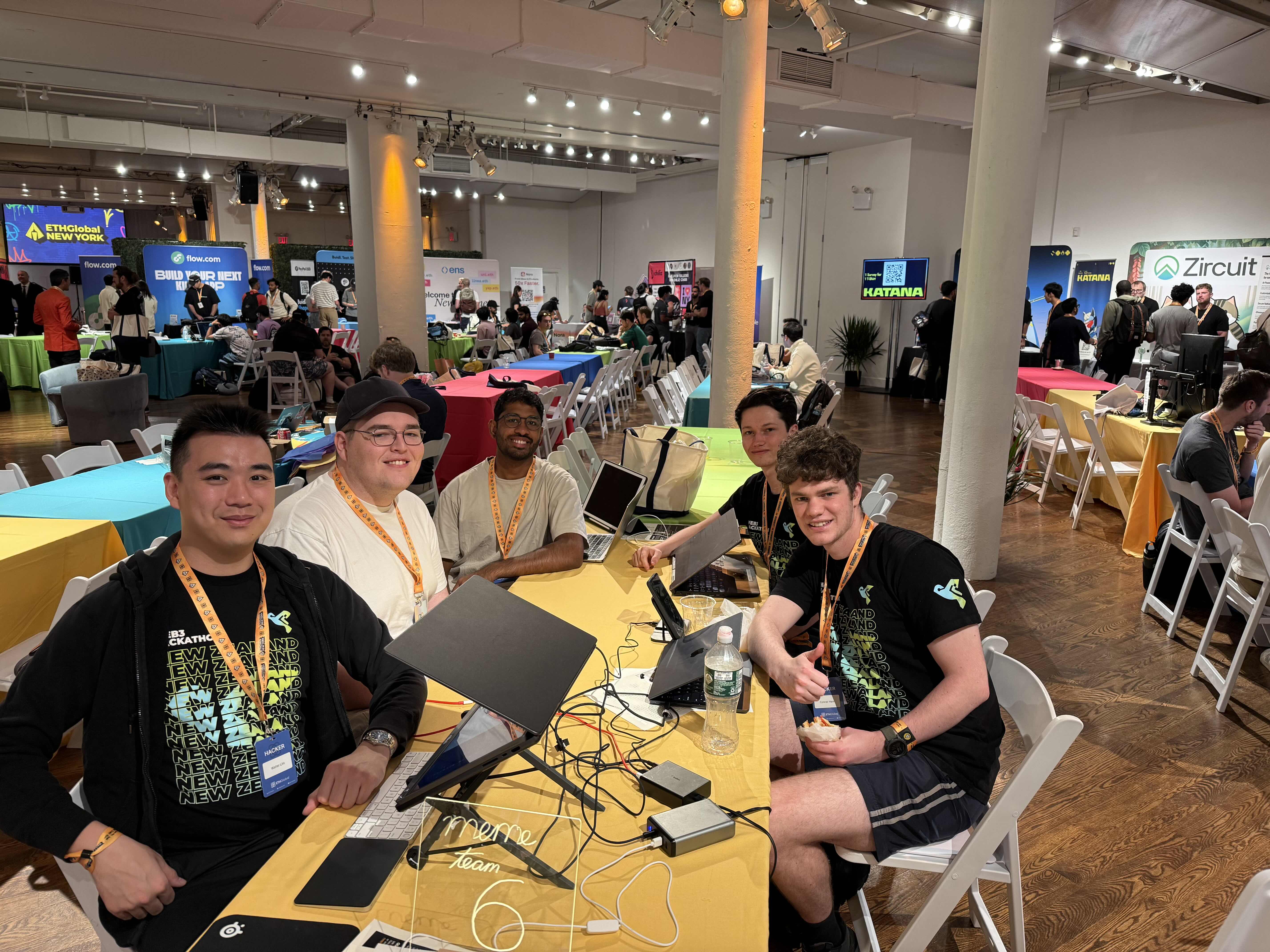
We built it at ETHGlobal New York in August 2025, after our LoanMarket prize funded the trip. The pitch also explored earning yield on idle funds and requiring debts to be settled before withdrawal. Those ambitions shaped the design, while the weekend's demo concentrated on the group and expense flows we could connect in time.
Make the pieces meet
The project crossed several boundaries: a browser interface, wallet access, backend services, and smart contracts. Expense proposals and group membership had to make sense in the interface while connecting to the contract operations beneath them. An AI endpoint supported receipt-reading assistance, adding another input path to the expense workflow.
I helped coordinate the product's scope and implemented work across those boundaries. My commits cover project and backend setup, frontend delivery, wallet integration, pending expenses, transactions, group and member flows, and wiring contract interfaces into the app. That was shared team work, with the integration giving the individual pieces a usable route through the demo.
Scope is an engineering decision
Our original plan connected a main Ethereum contract to contracts on other chains, with LayerZero messaging, Aave, and USDC transfers among the ideas on the whiteboard. The dependencies became difficult to fit together inside a weekend. Cross-chain functionality did not reach the intended result, so we reduced the scope rather than leaving the entire demonstration waiting on it.
The team delivered a working demo, though it did not win a prize and did not complete the larger cross-chain vision. HouseHodl remains an ETHGlobal prototype with public source and a project showcase. What interests me about it is the combination of product coordination and hands-on integration: deciding what the group could actually finish, then getting that path through the software to work.
Related writing

ETHGlobal NYC: HouseHodl
Flying to ETHGlobal NYC after winning Web3NZ: building HouseHodl, a trustless shared-expenses app, why cross-chain broke, and napping on the venue floor.

LoanMarket - Web3 Hackathon 2025
How a team of Web3 first-timers built LoanMarket in 18 hours, sharing one KYC verification across lenders with verifiable credentials, and won best overall.