List Anything
Turn car, rental, and Google Maps links into a shared shortlist you can compare.
List Anything turns saved links into a shared shortlist for decisions like choosing a car or finding a home. Photos, prices, listing details, and shared scores sit together, so you can compare options, filter the list, and explore locations on a map. It is a private app for iPhone, iPad, and Mac.
Carsales listings are collected through the app’s built-in browser. Rental details from realestate.com.au use Bright Data, a service for retrieving website data, and Google Maps links add places and menus. A GLM language model extracts useful claims from car descriptions and keeps the supporting quotes. The app is distributed privately through TestFlight.
Highlights
- Compare cars and rentals with shared scores
- Collect listing details without retyping
- Explore Google Maps places and menus
- Read seller claims alongside their source quotes
In action
What I built
Carsales in the browser
Open a listing in the app’s browser and turn its details and photos into a car you can compare.
Rentals without the retyping
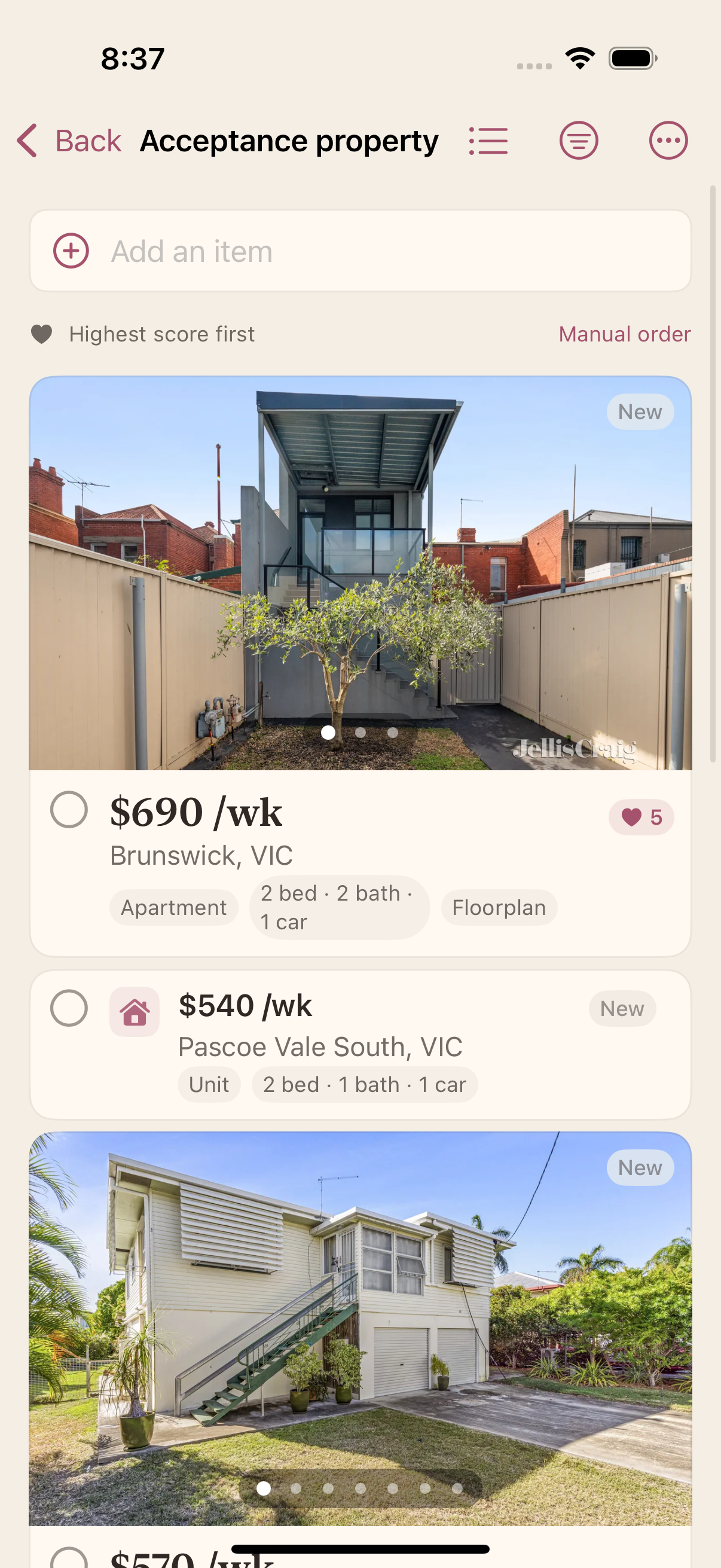
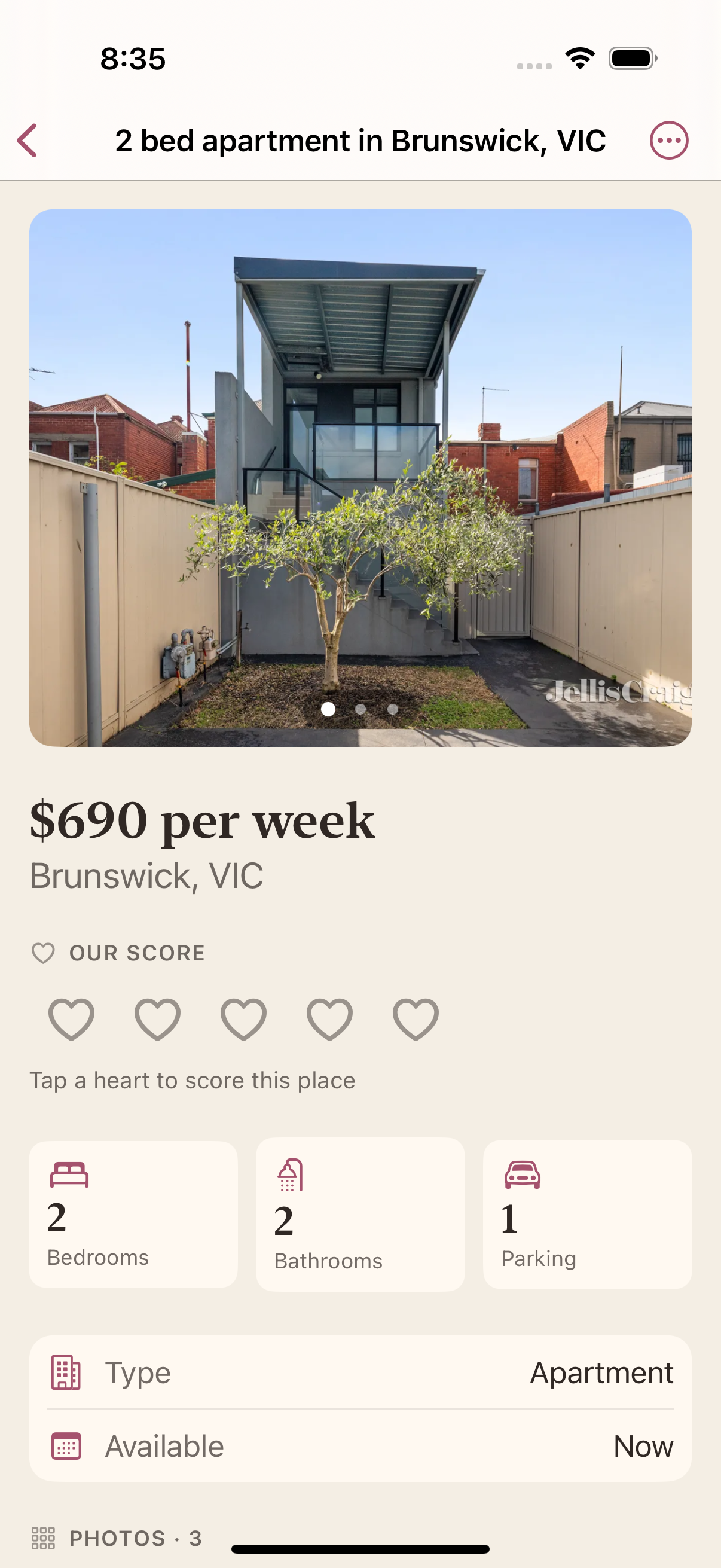
Save a realestate.com.au link to collect its photos, rent, and property details through Bright Data, ready to compare in the shared shortlist.
Google Maps on your shortlist
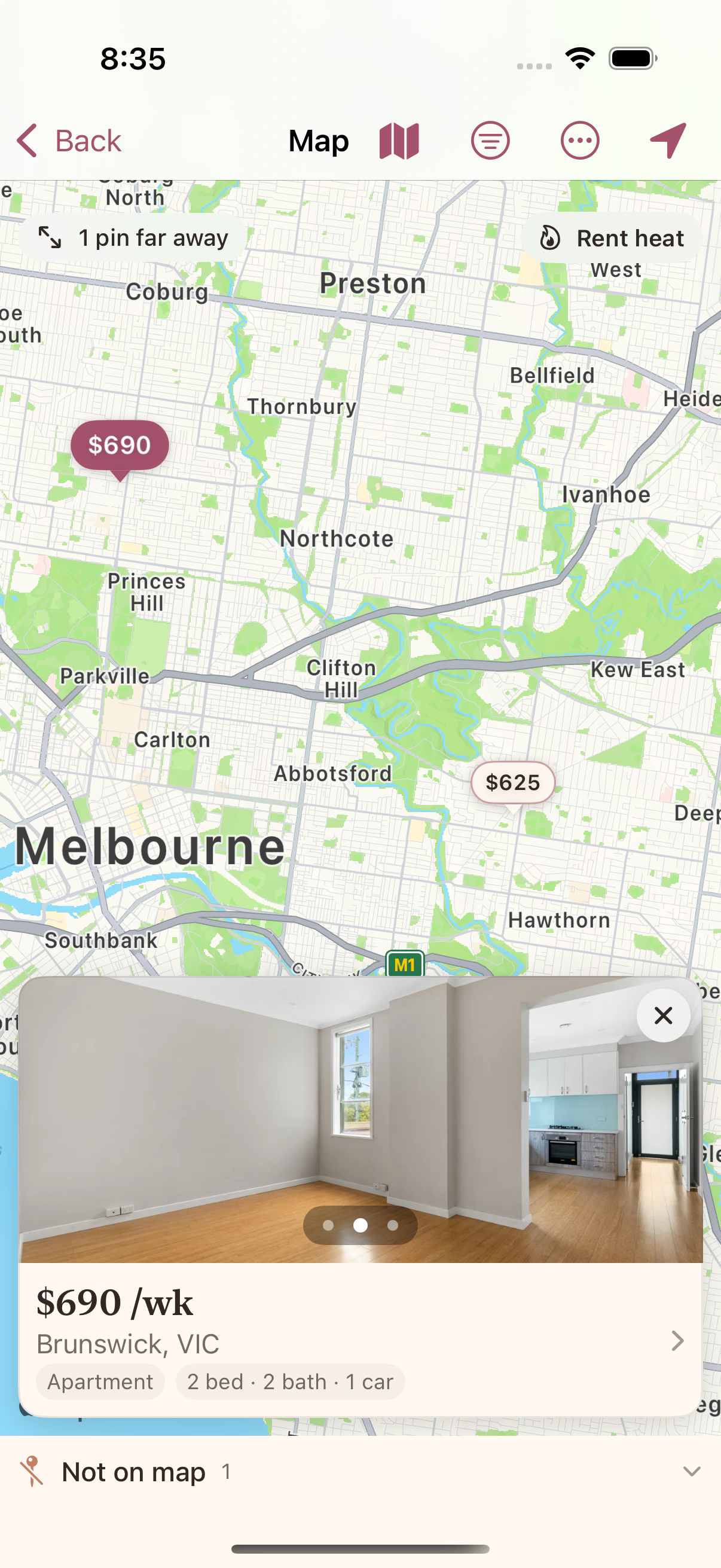
Collect Google Maps places, photos, and menus, then explore the list on a map.
Seller claims with receipts
A language model pulls claims such as service history from seller descriptions and keeps the supporting quotes. Claims without support are dropped.
A shortlist you can actually decide from
Saving a link is easy. Comparing it with a dozen other links is where the work starts: remembering the price, finding the good photos again, and working out what the other person thought. List Anything brings those pieces into the list itself. A car, rental property, or place gets a card suited to what it is, while notes, scores, and progress stay part of the same shared list.
That also changes how you browse. The same shortlist can be a compact list, a map, a comparison, or a magazine of places. Filters and sorting follow the items across those views, rather than making each view a separate collection to maintain.
Different websites needed different readers
There was no single reliable way to collect everything. Carsales listings are read in an embedded browser on the phone, then sent to a Cloudflare backend to turn the page into structured car details. Rental listings use Bright Data’s managed collection service. Google Maps places are also read on the device, with photographs and menus retained for later processing.
The capture is only the start. The app has to recognise the link, resolve its identity, avoid creating the same place twice, and show what is happening while the details arrive. If Carsales presents a human check, the browser shows it to the person using the app.
Useful AI, with something to check
A used-car description can hide the most useful detail halfway through the sales copy. GLM, a language model, reads it for claims about service history, condition, faults, and included work. Each short label carries the seller’s supporting words. The code rejects missing quotes, mismatched labels, and dealer boilerplate. A quote shows what the seller claimed; it does not establish that the claim is true.
Places need another kind of interpretation. Menu photographs and restaurant menus supply dishes and prices; a household’s editable spending basket turns those into an expected visit cost. Model judgements about photographs are labelled as the app’s interpretation. The source material remains available, so a better extraction can revisit it later.
Built for decisions away from a desk
The shortlist needs to work at a property inspection or while travelling, including with no mobile signal. The app keeps a local copy and queues supported edits until the server is reachable again. Changes merge field by field: a note and a score can both survive edits on different phones. For competing edits to the same field, the later edit wins.
It is a privately distributed Apple app with a Cloudflare backend and automated TestFlight releases. That delivery work matters as much as extraction: saved links, photos, corrections, and shared opinions have to remain useful between launches and releases.
Related writing

Local First, Offline First, and Cloud
Local-first vs offline-first vs cloud: who owns your data, why Evolu and CRDTs make local-first practical, and the Paprika problem waiting to strand you.

Interface Driven Development in the Age of AI
Ship AI-generated code without regret by hiding it behind interfaces: contracts, dependency injection, and why the old Java patterns were right all along.